

Wearing clear aligners for 20 to 22 hours a day is a real commitment. That same commitment needs to extend to how you clean them.
Dirty aligners don’t just look unpleasant. They can trap bacteria against your teeth for hours at a time, increasing your risk of tooth decay and gum irritation. A consistent cleaning routine takes only a few minutes each day and makes a meaningful difference to the health of your teeth throughout treatment. Clear aligners are worn for up to 22 hours each day, which means any bacteria on the tray surface stays in close contact with your teeth for extended periods.
Quick Overview
- A daily cleaning routine for clear aligners removes bacteria, plaque, and debris from the tray surface
- Anyone currently wearing aligners, or about to begin treatment, may benefit from this guidance
- Cleaning typically involves rinsing with lukewarm water, gentle brushing, and a daily soak
- How consistently you clean, the products you use, and whether you brush before reinserting trays all affect outcomes
- Persistent cloudiness, odour, or damage to trays are signs to speak with your dentist
Keep reading to understand the cleaning steps, which products are safe, and what to avoid.
Why Cleaning Your Aligners Matters
During treatment, saliva, food particles, and bacteria accumulate on the inner surface of the trays. The warm, enclosed space between the tray and your tooth surface creates conditions that support bacterial growth if cleaning is neglected.
Poor dental hygiene during aligner treatment increases the chance of gum disease, tooth decay, and staining. The benefit of removable aligners, compared with fixed appliances, is that both the teeth and the trays can be cleaned properly. That benefit only holds if you follow through.
When aligners are not cleaned properly, the risks include:
- Bacteria buildup beneath the trays, which may increase the risk of cavities
- Plaque accumulating at the gumline, contributing to gum irritation
- Discolouration of the trays, making them more noticeable
- Bad breath caused by bacteria trapped in warm, moist conditions
None of these outcomes is unavoidable. A straightforward cleaning routine addresses all of them.
How to Clean Aligners: The Daily Routine
A basic daily cleaning routine for clear aligners involves three steps: rinse, brush, and soak.
Step 1: Rinse with lukewarm water every time you remove your aligners
Each time you take your aligners out, rinse them immediately under lukewarm water. This removes loose saliva and debris before it dries onto the surface. Avoid hot water entirely. Heat can warp the plastic, affecting the fit of your trays and potentially disrupting treatment progress.
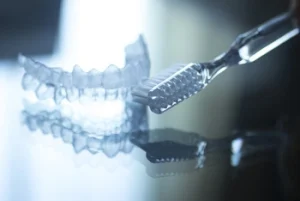 Step 2: Brush gently with a soft-bristled toothbrush
Use a soft-bristled toothbrush to brush the inside and outside of each tray. A clear, fragrance-free antibacterial soap works well here. Avoid toothpaste, particularly whitening varieties, as the abrasive particles can scratch the plastic surface and create micro-grooves where bacteria can settle.
Step 3: Soak once daily
A daily soak helps disinfect your aligners more thoroughly than rinsing alone. There are several options:
- Invisalign cleaning crystals: These are formulated specifically for aligner care. Key ingredients include sodium sulphate (a gentle cleaning agent that loosens debris), sodium carbonate (which raises alkalinity to break down mineral deposits), and sodium dichloroisocyanurate (which sanitises the surface). Dissolve one packet in lukewarm water, soak for 15 minutes, then rinse thoroughly before reinserting.
- Diluted hydrogen peroxide: Mix equal parts hydrogen peroxide and lukewarm water. Soak for 15 to 30 minutes, then rinse and brush gently afterwards.
- Diluted white vinegar: A tablespoon of white vinegar in a cup of lukewarm water can help address odour and light staining. Soak for 20 minutes, then rinse well.
- Mild antibacterial soap solution: Add a small amount of clear, fragrance-free soap to cool water, soak for 20 to 30 minutes, and rinse thoroughly before reinserting.
Note: denture cleaners are not recommended for aligners. Some formulations contain chemicals that can discolour or damage the aligner plastic over time.
What Does the Research Say About Aligner Hygiene?
Clear aligners can be cleaned more easily than fixed braces because they are removable. The Australian Dental Association advises that when cleaning your teeth, you should also clean your clear aligners, using an antibacterial soap and a spare toothbrush, then rinsing well with warm water.
The key risk with clear aligners is not the appliance itself, but what happens when cleaning is neglected. Bacteria colonise tray surfaces when trays are not cleaned regularly, and reinserting an uncleaned tray places those bacteria in direct contact with your tooth enamel for hours.
Individual outcomes vary depending on existing oral health, cleaning habits, and how consistently the routine is followed.
What Affects How Clean Your Aligners Stay?
Several factors influence how quickly bacteria and staining build up on your trays:
- Diet: Coffee, tea, and dark-coloured beverages stain the plastic and should only be consumed after removing aligners. Sugary drinks consumed while wearing aligners trap sugar against the tooth surface.
- Brushing before reinsertion: Reinserting aligners over unbrushed teeth introduces food particles and bacteria directly into the closed environment of the tray. Brushing and flossing before putting aligners back in is one of the most important habits in the entire routine.
- How often you rinse: Rinsing each time you remove your aligners prevents dried saliva from hardening on the surface, making the daily brush and soak more effective.
- Storage: When aligners are not in your mouth, they should be stored in their protective case. Leaving them on a bench exposes them to airborne bacteria and the risk of accidental damage.
A Considered Approach to Aligner Care
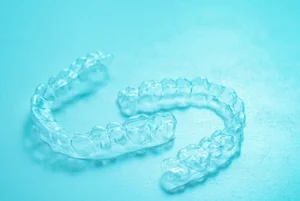 Maintaining good oral hygiene during aligner treatment reduces the risk of tooth decay and staining while keeping your trays clear and comfortable. Good oral hygiene during treatment is an important part of caring for teeth during treatment.
The steps above take only a few minutes each day and are worth doing consistently. If you notice persistent cloudiness, strong odour that does not resolve after cleaning, or any visible damage to your trays, it is worth speaking with your dentist before continuing to wear them.
If you would like guidance on aligner care or want to discuss whether clear aligners may suit your needs, we welcome you to get in touch with Pearl Dental Care.
Call us on 02 9158 6312 or book an appointment online.
Frequently Asked Questions
How often should I clean my aligners?
Aligners should be rinsed every time you remove them, and brushed at least twice a day, morning and evening. A soak in a suitable cleaning solution once a day provides deeper disinfection. Consistent daily cleaning helps prevent bacteria buildup, staining, and bad breath.
Can I use toothpaste to clean my Invisalign trays?
Most toothpastes, particularly whitening formulas, contain mild abrasives that can scratch the surface of clear aligner plastic. These scratches create grooves where bacteria can settle and are difficult to clean. A clear, fragrance-free antibacterial soap or dedicated aligner cleaner is a safer option for daily brushing.
References
Better Health Channel. (2025). ‘Orthodontic treatment’. Better Health Channel, 15 December. Melbourne, VIC: Department of Health, State Government of Victoria. https://www.betterhealth.vic.gov.au/health/conditionsandtreatments/orthodontic-treatment
Australian Dental Association. (n.d.). ‘Teeth Straightening and Braces’. teeth.org.au. Sydney, NSW: Australian Dental Association. https://www.teeth.org.au/teeth-straightening-and-braces
Healthdirect Australia. (2025). ‘Dental braces and retainers’. Healthdirect Australia, February. Canberra, ACT: Australian Government Department of Health. https://www.healthdirect.gov.au/dental-braces-and-retainers