If you’restarting clear aligners, your dentist may mention small, tooth coloured bumps called clear aligner attachments. They can look like a minor detail, but they play a real part in how your aligner treatment works.
At Pearl Dental Care, we take the time to walk you through each part of your aligner plan, attachments included, so you know what’s involved before anything begins.
Quick Overview
Clear aligner attachments are small, tooth coloured shapes bonded to certain teeth to help aligners grip and guide them.
They’re often used in clear aligner treatment, though not every patient, or every tooth, needs them.
They may help with specific tooth movements that a smooth plastic tray can find harder to manage on its own.
Their shape, size and placement depend on your treatment planning, and how well you wear your aligners can also influence results.
Whether attachments are part of your plan is something your dentist can explain once your teeth have been assessed.
Below, we explain how attachments work, how they’re placed and removed, and what to expect day to day.
What Are Clear Aligner Attachments?
Clear aligner attachments are small bumps made from tooth coloured composite resin, the same type of material used for white fillings. They’re bonded onto the tooth surface of specific teeth to give your aligners something to hold onto, so the trays can apply force in a more controlled direction.
Aligners are thin and slightly flexible, so on a smooth surface, a tray can slip a little as it pushes. Attachments act a bit like handles. Each aligner is shaped to fit snugly over them, so the tray can gently push or turn the tooth towards its desired position.
You may also hear them called aligner attachments. The name often depends on the aligner brand, but the basic idea is similar across systems, and they’re a common part of modernorthodontic treatment.
Why Do Some Teeth Need Attachments?
Tipping a tooth slightly forward or back is fairly simple for an aligner. More complex movements can be harder, such as:
Turning a rounded tooth, like a canine tooth or premolar
Moving a tooth up or down in the gum
Moving the root as well as the crown, rather than just tilting the tooth
Holding back teeth steady while front teeth move
Research suggestsattachments may help with root movement, rotations and moving teeth along the arch, though results across studies aren’t always consistent. A broader review of the evidence also found thatattachment design and placement should be tailored to each patient, as no single setup suits everyone.
Attachments can also help keep the aligner properly seated, which may reduce unwanted movements in teeth that are meant to stay still.
How Are Attachments Placed and Removed?
Attachments are usually placed when you receive your first aligners. The process typically looks like this:
The tooth surface is cleaned and lightly prepared so the material can bond.
A thin bonding agent is applied.
A template aligner, filled with composite material in the planned shapes, is fitted over your teeth.
A curing light sets the composite, then the template is gently removed.
Any excess material is tidied up.
When treatment finishes, the attachments are gently removed, and the tooth is polished back to a smooth surface. Your dentist will then talk you through retainers, which help hold your teeth in their new position.
What Affects How Clear Aligner Attachments Work?
Several things can influence how well attachments do their job, and treatment outcomes vary depending on your individual situation:
Shape and size. Attachments come in different shapes. A rectangular shape is common, while others are bevelled or rounded for particular movements.
Position on the tooth. Where an attachment sits changes how the aligner applies force.
The planned movements. Complex cases with more turning or root movement may need more attachments than mild crowding.
Wear time. Attachments can’t do much if your aligners spend long periods out of your mouth.
Attachment condition. An attachment can occasionally chip or come off. If this happens, let your dentist know so it can be checked and replaced if needed.
How to Care For Your Teeth During Clear Aligner Treatment
Attachments add a few small ridges to your teeth, and plaque can collect around their edges more easily. A little extra care helps:
Brush twice a day with fluoride toothpaste, paying attention to the edges of each attachment.
Clean between your teeth every day.
Clean your aligners when you brush.
Take your aligners out to eat and for drinks other than water, as sugary or acidic drinks can get trapped against your teeth.
Australian dental guidance highlights the importance of brushing and cleaning between your teeth during orthodontic treatment. It also advises against do-it-yourself teeth straightening without an in-person assessment and ongoing supervision.
A Considered Approach to Clear Aligner Attachments
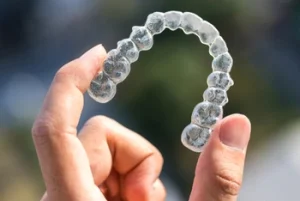
Attachments are one small part of a bigger plan. Whether you need them, how many you need and where they go all depend on your teeth, your bite and the movements your plan involves.
If you’d like to find out whether clear aligners may suit you, and what attachments would mean for your treatment, our friendly team in St Marys is here to help. We’ll talk you through your options at a pace that suits you, with no pressure to decide on the day.
Placing attachments doesn’t usually require an injection. It’s common to feel mild discomfort or pressure when a new aligner is fitted over them, which tends to settle within a few days. Let your dentist know if an attachment feels sharp or rubs against your lip or cheek.
How long do aligner attachments stay on?
They usually stay on for the length of your aligner treatment, which can vary depending on your case. Some attachments may be added or removed partway through if your plan is adjusted.
Can attachments damage your teeth?
Attachments are bonded to the outer surface of the tooth and polished off by your dentist at the end of treatment. Keeping them clean matters, as plaque can build up around the edges.
Are aligner attachments noticeable?
They’re tooth coloured, so they tend to blend in, especially under clear aligners. People may notice them up close, particularly on front teeth, and the material can pick up some staining over time.
What happens if an attachment falls off?
Contact your dentist and let them know which set of aligners you’re up to. Keep wearing your aligners unless advised otherwise, and your dentist can tell you whether the attachment needs to be replaced to keep your planned movements on track.
References
Effects of composite attachments on orthodontic clear aligner therapy: a systematic review (Materials, 2022): https://pmc.ncbi.nlm.nih.gov/articles/PMC8778413/
Understanding the effectiveness of attachments in clear aligner therapy: design, placement, material selection and biomechanics (Australasian Orthodontic Journal, 2024): https://reference-global.com/article/10.2478/aoj-2024-0021
Teeth straightening and braces (Teeth.org.au, Australian Dental Association): https://teeth.org.au/teeth-straightening-and-braces
Wearing clear aligners for 20 to 22 hours a day is a real commitment. That same commitment needs to extend to how you clean them.
Dirty aligners don’t just look unpleasant. They can trap bacteria against your teeth for hours at a time, increasing your risk of tooth decay and gum irritation. A consistent cleaning routine takes only a few minutes each day and makes a meaningful difference to the health of your teeth throughout treatment. Clear aligners areworn for up to 22 hours each day, which means any bacteria on the tray surface stays in close contact with your teeth for extended periods.
Quick Overview
A daily cleaning routine for clear aligners removes bacteria, plaque, and debris from the tray surface
Anyone currently wearing aligners, or about to begin treatment, may benefit from this guidance
Cleaning typically involves rinsing with lukewarm water, gentle brushing, and a daily soak
How consistently you clean, the products you use, and whether you brush before reinserting trays all affect outcomes
Persistent cloudiness, odour, or damage to trays are signs to speak with your dentist
Keep reading to understand the cleaning steps, which products are safe, and what to avoid.
Why Cleaning Your Aligners Matters
During treatment, saliva, food particles, and bacteria accumulate on the inner surface of the trays. The warm, enclosed space between the tray and your tooth surface creates conditions that support bacterial growth if cleaning is neglected.
Poor dental hygiene during aligner treatment increases the chance of gum disease, tooth decay, and staining. The benefit of removable aligners, compared with fixed appliances, is that both the teeth and the trays can be cleaned properly. That benefit only holds if you follow through.
When aligners are not cleaned properly, the risks include:
Bacteria buildup beneath the trays, which may increase the risk of cavities
Plaque accumulating at the gumline, contributing to gum irritation
Discolouration of the trays, making them more noticeable
Bad breath caused by bacteria trapped in warm, moist conditions
None of these outcomes is unavoidable. A straightforward cleaning routine addresses all of them.
Step 1: Rinse with lukewarm water every time you remove your aligners
Each time you take your aligners out, rinse them immediately under lukewarm water. This removes loose saliva and debris before it dries onto the surface. Avoid hot water entirely. Heat can warp the plastic, affecting the fit of your trays and potentially disrupting treatment progress.
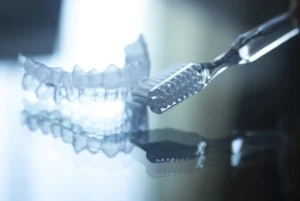
Step 2: Brush gently with a soft-bristled toothbrush
Use a soft-bristled toothbrush to brush the inside and outside of each tray. A clear, fragrance-free antibacterial soap works well here. Avoid toothpaste, particularly whitening varieties, as the abrasive particles can scratch the plastic surface and create micro-grooves where bacteria can settle.
Step 3: Soak once daily
A daily soak helps disinfect your aligners more thoroughly than rinsing alone. There are several options:
Invisalign cleaning crystals: These are formulated specifically for aligner care. Key ingredients include sodium sulphate (a gentle cleaning agent that loosens debris), sodium carbonate (which raises alkalinity to break down mineral deposits), and sodium dichloroisocyanurate (which sanitises the surface). Dissolve one packet in lukewarm water, soak for 15 minutes, then rinse thoroughly before reinserting.
Diluted hydrogen peroxide: Mix equal parts hydrogen peroxide and lukewarm water. Soak for 15 to 30 minutes, then rinse and brush gently afterwards.
Diluted white vinegar: A tablespoon of white vinegar in a cup of lukewarm water can help address odour and light staining. Soak for 20 minutes, then rinse well.
Mild antibacterial soap solution: Add a small amount of clear, fragrance-free soap to cool water, soak for 20 to 30 minutes, and rinse thoroughly before reinserting.
Clear aligners can be cleaned more easily than fixed braces because they are removable. The Australian Dental Association advises that when cleaning your teeth, you should also clean your clear aligners, using anantibacterial soap and a spare toothbrush, then rinsing well with warm water.
The key risk with clear aligners is not the appliance itself, but what happens when cleaning is neglected. Bacteria colonise tray surfaces when trays are not cleaned regularly, and reinserting an uncleaned tray places those bacteria in direct contact with your tooth enamel for hours.
Individual outcomes vary depending on existing oral health, cleaning habits, and how consistently the routine is followed.
Diet: Coffee, tea, and dark-coloured beverages stain the plastic and should only be consumed after removing aligners. Sugary drinks consumed while wearing aligners trap sugar against the tooth surface.
Brushing before reinsertion: Reinserting aligners over unbrushed teeth introduces food particles and bacteria directly into the closed environment of the tray. Brushing and flossing before putting aligners back in is one of the most important habits in the entire routine.
How often you rinse: Rinsing each time you remove your aligners prevents dried saliva from hardening on the surface, making the daily brush and soak more effective.
Storage: When aligners are not in your mouth, they should be stored in their protective case. Leaving them on a bench exposes them to airborne bacteria and the risk of accidental damage.
A Considered Approach to Aligner Care
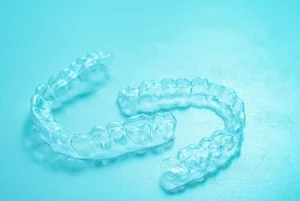
Maintaining good oral hygiene during aligner treatment reduces the risk of tooth decay and staining while keeping your trays clear and comfortable. Good oral hygiene during treatment is an important part ofcaring for teeth during treatment.
The steps above take only a few minutes each day and are worth doing consistently. If you notice persistent cloudiness, strong odour that does not resolve after cleaning, or any visible damage to your trays, it is worth speaking with your dentist before continuing to wear them.
If you would like guidance on aligner care or want to discuss whether clear aligners may suit your needs, we welcome you to get in touch withPearl Dental Care.
Aligners should be rinsed every time you remove them, and brushed at least twice a day, morning and evening. A soak in a suitable cleaning solution once a day provides deeper disinfection. Consistent daily cleaning helps prevent bacteria buildup, staining, and bad breath.
Can I use toothpaste to clean my Invisalign trays?
Most toothpastes, particularly whitening formulas, contain mild abrasives that can scratch the surface of clear aligner plastic. These scratches create grooves where bacteria can settle and are difficult to clean. A clear, fragrance-free antibacterial soap or dedicated aligner cleaner is a safer option for daily brushing.
References
Better Health Channel. (2025). ‘Orthodontic treatment’. Better Health Channel, 15 December. Melbourne, VIC: Department of Health, State Government of Victoria. https://www.betterhealth.vic.gov.au/health/conditionsandtreatments/orthodontic-treatment
Australian Dental Association. (n.d.). ‘Teeth Straightening and Braces’. teeth.org.au. Sydney, NSW: Australian Dental Association. https://www.teeth.org.au/teeth-straightening-and-braces
Healthdirect Australia. (2025). ‘Dental braces and retainers’. Healthdirect Australia, February. Canberra, ACT: Australian Government Department of Health. https://www.healthdirect.gov.au/dental-braces-and-retainers
When it comes to braces vs clear aligners, many patients feel torn between two effective yet very different approaches to orthodontic treatment. Both options aim toachieve correct alignment, improve bite issues, and enhance your smile. Yet the journey, experience, and lifestyle adjustments involved can vary significantly.
Choosing between traditional braces and clear aligners is not just about appearance. It is about understanding your orthodontic problems, your case complexity, your daily habits, and your long-term goals. With all the information available today, it can feel overwhelming. This guide will walk you through braces vs. clear aligners in a practical, clear, and easy-to-follow way.
Why Straightening Teeth Matters More Than You Think
A straighter smile is often associated with aesthetics, but the benefits go deeper. Proper alignment helps with brushing, supports good oral hygiene, reduces uneven wear, and may lower the risk of gum concerns.
Orthodontic treatment is not purely cosmetic. It can treat spacing, significant crowding, severe crowding, and bite issues that affect chewing and speech. Whether you are an adult exploring discreet options or a parent considering treatment for a child, understanding the best method for your situation is the first step.
What Are Traditional Braces and How Do They Work?
Traditional braces are atime-tested orthodontic treatment designed to gradually move teeth into correct alignment. They use a fixed system of brackets and wires to apply steady, controlled pressure that guides predictable tooth movement over time.
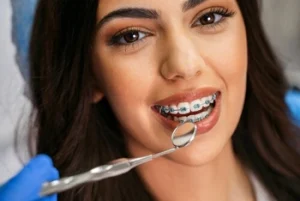
The Structure Behind Traditional Braces
Traditional braces use traditional brackets attached to each tooth. These brackets are connected by metal wires that guide tooth movement over time. Small elastics are sometimes added to assist with bite correction.
Metal braces are fixed, meaning they cannot be removed. Once placed, they remain in the mouth until treatment is complete. Regular adjustment at each appointment allows the dentist to tighten wires and refine alignment.
How Tooth Movement Happens
The science behind braces is steady and controlled force. The metal wires apply pressure to the teeth, gradually shifting them into correct alignment. This process happens over months or sometimes years, depending on several factors, including case complexity and treatment duration.
Because braces are fixed, tooth movement is consistent. There is no reliance on patient compliance for daily wear time. This makes braces especially helpful in many cases involving severe crowding or complex cases.
What Are Clear Aligners and How Do They Work?
Clear aligners are a modern orthodontic treatment designed to gently move teeth into correct alignment using a series of custom-made, transparent trays. They offer a morediscreet and flexible alternative to traditional braces, while still applying controlled pressure to guide gradual tooth movement over time.
The Basics of Clear Aligner Therapy
Clear aligners are custom-made, removable trays that fit snugly over the teeth. They are worn for most of the day and changed every few weeks as treatment progresses.
Clear aligner therapy uses a series of carefully designed trays to guide gradual tooth movement. Each aligner applies gentle pressure, similar to braces, but without metal wires or traditional brackets.
The Importance of Wear Time
Because aligners are removable, patient compliance becomes essential. Aligners must be worn for the recommended hours each day to achieve correct alignment. Reduced wear time can affect progress and extend treatment duration.
Clear aligners are often chosen for their discreet appearance. They are less noticeable than metal braces, which appeals to adults and teens concerned about aesthetics.
Braces vs Clear Aligners: What Is the Real Difference?
When comparing braces vs. clear aligners, it helps to consider the key factors involved.
Appearance and Aesthetics
Metal braces are visible. Traditional brackets and wires can be noticeable when smiling or speaking. For some patients, this is not a concern. For others, especially adults in professional settings, a discreet option is preferred.
Clear aligners are transparent and fit closely over the teeth. While not completely invisible, they are generally less noticeable. Many patients choose aligners because they prefer a subtle approach.
Removable vs Fixed
Braces are fixed. You cannot remove them for eating or brushing.
Clear aligners can be taken out when needed, giving you greater flexibility during treatment. You can remove them for meals and while brushing your teeth, making daily routines easier to manage. However, this same flexibility requires strong compliance. If aligners are not worn as instructed, the treatment may not progress as planned.
Which Option Handles Complex Cases Better?
When it comes to managing complex cases, the answer depends on the severity of the orthodontic problems and the level of control required. Factors such as severe crowding, bite issues, and overall case complexity play a major role in determining which treatment option is most suitable.
Severe Crowding and Significant Bite Issues
In complex cases involving severe crowding, significant crowding, or major bite correction, traditional braces often remain the preferred treatment option. Their fixed design and precise control over metal wires allow dentists to treat a wide range of orthodontic problems.
Braces can also use elastics and additional tools to address complex bite issues effectively.
Moderate Cases and Mild Alignment Concerns
Clear aligners are highly effective for moderate cases and mild spacing or alignment concerns. Advances in clear aligner therapy have expanded what can be treated, and in many cases, aligners can manage moderate crowding and bite concerns successfully.
The decision depends on case complexity, your dentist’s assessment, and the goals of treatment.
Lifestyle Considerations: Eating, Speaking and Daily Habits
Orthodontic treatment does not happen in isolation. It becomes part of your daily routine, influencing how you eat, speak, brush, and navigate social or professional settings. Understanding how braces and aligners fit into your lifestyle can make the decision feel far more practical and personal.
Eating With Braces and Aligners
With braces, certain foods must be avoided. Hard or sticky foods can damage brackets and wires. Eating requires more care.
With clear aligners, you remove the trays before eating. There are fewer dietary restrictions, but aligners must be cleaned before being placed back in the mouth.
Oral Hygiene and Brushing
Braces require careful brushing around brackets and wires. Maintaininggood oral hygiene can take more time and attention. Special brushes may be recommended.
Clear aligners simplify brushing. Since they are removable, you brush and floss as normal. However, aligners themselves must also be cleaned to maintain hygiene and avoid odour.
Both options require commitment to oral hygiene. Poor hygiene can affect treatment outcomes and overall dental health.
Discomfort and Adjustment Period
Both braces and clear aligners can cause temporary discomfort, particularly after adjustments or when switching to a new aligner.
With metal braces, soreness may occur after wire tightening appointments. Brackets can also irritate the inside of the mouth.
With aligners, pressure is often felt when starting a new tray. Some patients also notice minor speech changes during the first days.
In most cases, discomfort is manageable and temporary. The mouth adapts as treatment progresses.
Treatment Duration and Overall Cost
When comparing orthodontic treatment options, time and financial commitment are often key considerations. Understanding how treatment duration and overall cost vary between braces and clear aligners can help you set realistic expectations and plan with confidence.
How Long Does Treatment Take?
Treatment duration varies based on several factors. Case complexity, patient compliance, and the type of correction required all play a role.
In many cases, braces and clear aligners have similar timelines. Mild cases may take less time, while complex cases require longer treatment.
Understanding Cost Differences
The overall cost of braces vs clear aligners depends on the complexity of the case, the clinic, and the length of treatment. Clear aligners can sometimes cost slightly more due to the digital planning and custom manufacturing involved.
However, cost should not be the only deciding factor. The best method is one that suits your clinical needs and lifestyle.
Adults, Teens and Different Priorities
Many adults prefer clear aligners because they are discreet and fit easily into professional lifestyles. Aligners are less visible and can be removed for important events.
For younger patients, braces may offer greater reliability since they are fixed. Compliance can be challenging for teens who may forget to wear aligners consistently.
That said, many teens do successfully complete clear aligner therapy when motivated and supported.
How Compliance Affects Results
Patient compliance plays a major role in braces vs clear aligners outcomes.
With braces, progress does not depend on daily decision-making because they are fixed. With aligners, compliance affects tooth movement directly. Skipping wear time can delay correction and extend treatment.
Understanding your habits and lifestyle is crucial when deciding which option suits you best.
Progress and Regular Appointments
Regardless of the treatment option, regular appointment visits are essential. The dentist monitors alignment, adjusts the treatment plan if necessary, and ensures healthy progress.
With braces, adjustments often involve tightening metal wires or changing elastics.
With aligners, new trays are provided, and progress is assessed. Digital monitoring may also be part of the process in some clinics.
Braces vs Clear Aligners: What About Long-Term Results?
Both braces and clear aligners can achieve correct alignment and lasting results when used appropriately. Retainers are usually worn after treatment to maintain alignment.
The key to long-term success is not just the method chosen, but commitment during and after treatment.
Making the Right Choice for Your Smile
When weighing braces vs clear aligners, consider these factors:
Case complexity and whether severe crowding orcomplex bite issues are involved
Your willingness to maintain strong patient compliance
Lifestyle considerations such as eating habits and professional appearance
Budget and overall cost
Personal comfort with fixed or removable appliances
There is no universal answer in braces vs clear discussions. The right choice depends on your individual needs.
Final Thoughts on Braces vs Clear Aligners
Braces vs clear aligners is not about which option is better in general. It is about which treatment option suits your specific orthodontic problems, case complexity, and lifestyle.
Traditional braces offer reliability and precise control, particularly in complex cases involving significant crowding or bite issues. Clear aligners provide flexibility and a more discreet appearance, which many patients appreciate for professional and social reasons.
Withguidance from an experienced dentist, you can review all the information, understand the factors involved, and decide with clarity. If you are considering orthodontic treatment, contactPearl Dental Care on 02 9158 6312 to book a consultation and explore which option suits your needs. The goal remains the same. Achieve correct alignment, support good oral hygiene, and enjoy a healthy, confident smile for years to come.
References
American Association of Orthodontists. (n.d.). 7 common bite problems. Retrieved from https://aaoinfo.org/whats-trending/7-common-bite-problems/
Colgate. (n.d.). How to practice good oral hygiene with braces. Retrieved from https://www.colgate.com/en-us/oral-health/kids-oral-care/how-to-practice-oral-hygiene-with-braces
Cozzani, M. (2016). Oral hygiene compliance in orthodontic patients. PubMed Central. Retrieved from https://pmc.ncbi.nlm.nih.gov/articles/PMC5165014/
Cleveland Clinic. (n.d.). Teeth braces: Types and how they work. Retrieved from https://my.clevelandclinic.org/health/treatments/24601-teeth-braces
Deciding whether to straighten bottom teeth is an important consideration for both adults and children with crooked or crowded lower teeth. Misalignment of the lower teeth can affect bite function, oral hygiene, and overall dental health, as well as the appearance of your smile.
Understanding the available treatment options, how they work, and what factors may influence your results can help you make informed decisions. This knowledge allows you to make a personalised plan toachieve straight teeth effectively.
Understanding Crooked Bottom Teeth
Crooked teeth, especially in the lower row, are common in both children and adults. Misaligned teeth can result from various factors. These dental issues may affect the appearance of your smile, your oral health, and the alignment of your upper and lower teeth.
Misalignment of the bottom teeth can sometimes lead to bite problems, affecting how your top and bottom teeth meet when you close your mouth.
Properly aligned teeth help you maintain oral hygiene and lower therisk of tooth decay, bad breath, gum disease, and other possible dental complications.
Understanding the underlying cause helps your dentist determine a suitable treatment approach for your individual case.
Why It’s Important to Straighten Lower Teeth
Straight teeth contribute to overall oral health by making it easier to clean teeth effectively. Crooked or crowded lower teeth can create tight spaces that are difficult to reach with a floss or toothbrush, increasing the likelihood of plaque build-up and gum disease.
Additionally, misalignment can affect chewing efficiency and even place unnecessary stress on your jaw.
Beyond oral health, achieving straight teeth can improve the functionality of your bite. Aligning both upper and lower teeth helps evenly distribute bite forces, supporting long-term dental health and comfort.
Treatment Options for Straightening Bottom Teeth
Several approaches exist to straighten bottom teeth, depending on the severity of the misalignment and individual preferences.
Discussing your options with a dentist is necessary for creating a personalised treatment plan.
Traditional Metal Braces
Traditional metal braces are a well-established method forgradually straightening teeth. These braces involve brackets attached to each tooth, connected by a wire that gets periodically adjusted by the dentist to move teeth into the desired position.
Metal braces are suitable for correcting misalignment of both upper and lower teeth, bite problems, and crowding. While noticeable, these braces remain highly effective for complex cases and can achieve precise tooth alignment.
Clear Aligners
Clear aligners are a less noticeable option than traditional metal braces. These removable alignersare customised to fit snugly and are changed every few weeks as your teeth gradually straighten.
Clear aligner treatment is particularly appealing for adults and older teens who prefer a discreet option. It can address crooked teeth, crowding, and mild bite problems in the bottom row.
Steps to Straighten Crooked Lower Teeth
Achieving straight teeth involves several key steps:
Initial Consultation: Your dentist assesses your oral health, bite, and alignment of upper and lower teeth.
Treatment Planning: A custom-made plan is created that details the treatment options, estimated duration, and any supportive interventions required.
Braces or Aligners Placement: Depending on your preference, traditional braces or removable aligners are fitted to gradually straighten your teeth.
Regular Adjustments and Monitoring: Braces are adjusted, or new aligners are provided to ensure teeth continue to move into the desired position.
Retention Phase: After teeth straightening, wear retainers as advisedto maintain results and prevent relapse.
Following these steps and adhering to your dentist’s recommendations will help you achieve straighter teeth.
Maintaining Good Oral Hygiene During Treatment
Good oral hygiene is necessary during any teeth straightening process. Crowded teeth are difficult to clean, so it’s important to brush and floss carefully to reduce the risk of gum disease, plaque build-up, and bad breath. Regular check-ups and professional cleanings are recommended throughout your treatment.
For patients using aligners, maintaining oral hygiene is easier because they can be removed before brushing and flossing. For traditional metal braces, extra attention is required to clean around brackets and wires.
Managing Treatment Duration
The duration of teeth straightening treatment varies based on the severity of misalignment, the type of treatment, and the individual’s age.
Traditional metal braces may take longer for complex cases, while clear aligners can be quicker for mild to moderate crowding. Your dentist will provide a realistic timeline and monitor progress throughout the treatment.
Frequently Asked Questions
Do traditional braces hurt?
Some mild discomfort or soreness is common after adjustments, but it is usually manageable.
Can dental veneers replace orthodontic treatment?
Dental veneers improve the appearance of crooked teeth but do not correct underlying misalignment or bite problems. Orthodontic treatment is necessary to truly straighten teeth and align the upper and lower teeth.
Can braces or aligners affect my speech?
Initially, some patients can notice slight changes in speech, but they typically adapt quickly. Clear aligners are customised, so they have minimal impact on speech.
Are the results permanent?
Results can be long-lasting if retainers are worn as advised. Skipping retention may allow teeth to shift over time.
Can orthodontic treatment correct teeth crowding caused by missing teeth?
DIY braces are not recommended. Professional supervision is essential to avoid dental issues such as misalignment, gum damage, and bite problems.
Conclusion
Straightening bottom teeth is a journey that combines personalised care, professional expertise, and commitment to oral health.
Whether you choose traditional metal braces, clear aligners, or a combination of orthodontic treatment and cosmetic options, a structured plan and ongoing dental guidance ensure effective results.
By addressing crooked teeth and bite issues, you support your oral health andenhance your smile.
Taking the first step towards straighter teeth begins with a consultation. Your dentist can help you explore treatment options, create a tailored plan, and guide you on the path to achieving a beautiful, functional smile.
If you’re ready to straighten your bottom teeth and improve both the function and appearance of your smile, our experienced dental team can guide you through the right treatment options for your individual case.
From traditional metal braces to clear removable aligners, we’ll create personalised treatment plans that suit your needs and lifestyle.
Book a consultation today withPearl Dental Care at 02 9158 6312 to discuss your goals, explore treatment options, and start your journey towards a healthier, straighter smile.
References
Healthdirect Australia. (2025, February). Dental Braces and Retainers. Healthdirect. Retrieved December 4, 2025, from https://www.healthdirect.gov.au/dental-braces-and-retainers
Roland, J. (2020, November 11). Why Teeth Shift After Dental Procedures and Over Time. Healthline. Retrieved December 4, 2025, from https://www.healthline.com/health/teeth-shifting
Santhakumar, S. (2022, February 7). What to Know About Metal Braces. Medical News Today. Retrieved December 4, 2025, from https://www.medicalnewstoday.com/articles/metal-braces-uses-costs-benefits-and-more-2
WebMD Editorial Contributors. (2024, October 14). Dental Health With Crooked Teeth and Misaligned Bites. WebMD. Retrieved December 4, 2025, from https://www.webmd.com/oral-health/crooked-teeth-misaligned-bites
Achieving a straighter smile is now more convenient and discreet than before. Clear aligners, sometimes called invisible teeth aligners, have become a popular option for many adults and teens seeking an alternative to traditional braces.
Though, they are not exactly invisible, these clear, removable aligners are designed to move your teeth into their desired position with minimal disruption to your daily life.
This guide explores how clear aligners work, what to expect during your treatment, and how they compare with traditional braces.
Understanding ‘Invisible’ Teeth Aligners
Clear aligners, are custom-made dental trays that fit snugly over teeth. They use gentle, consistent pressure tomove your teeth over time. Unlike traditional metal braces, there are no brackets or wires, just smooth, clear trays designed to align your teeth gradually.
Each set of custom aligners is worn for around two weeks before being replaced with a new set. This incremental process allows for controlled tooth movement and helps ensure favourable results throughout your treatment plan.
How Clear Aligners Work
Clear aligners work through a sequence of precisely engineered movements. During your initial consultation, your dental practitioner will assess your teeth, gums, and jaw joints to determine whether you are a candidate for treatment.
Modern digital technology is used to create a 3D model of your teeth. This model helps design a personalised approach to your treatment, mapping out the exact movements required to reach your desired position. Each new aligner in the seriesmakes slight adjustments to tooth position, helping you gradually achieve straighter teeth over time.
Comparing Clear Aligners and Traditional Braces
Traditional metal braces rely on brackets and wires to shift teeth into alignment. While effective,they are more noticeable and can make brushing and flossing more challenging.
Clear aligners, on the other hand, offer a more discreet and convenient alternative. Because they are completely removable, you can take them out when eating, brushing, or flossing. This makes it easier to maintain dental hygiene throughout your treatment.
Although both options aim to correct misalignment, overbites, and crowding, clear aligners provide a smoother surface that may reduce irritation to the gums and cheeks compared to metal braces.
The Clear Aligners Treatment Process
The process begins with an initial consultation to determine your eligibility for treatment. Once confirmed, your dentist will take detailed impressions of your teeth to design your custom-made aligners.
Regular check-ins allow your dentist to monitor progress and provide new dental aligners as your teeth continue to move.
What to Expect When Wearing Aligners
Wearing aligners may take a few days to get used to, as your mouth adjusts to their presence. During this period, you may feel mild pressure, which simply indicates that your teeth are moving as planned.
You will be advised to wear your clear aligners most of the day and only remove them for eating, brushing, and flossing. Adhering to your recommended wear time helps ensure effective movement and favourable results.
Maintaining Oral Hygiene During Treatment
Good oral hygiene remains essential while undergoing clear aligners treatment. Always brush your teeth a few minutes after eating before putting your dental aligners back in to prevent staining and bacteria build-up.
Flossing daily and cleaning your aligners as instructed by your dentist can help maintain your gums and teeth in optimal condition throughout the process. Using a soft brush and mild cleanser is usually recommended to keep your aligners clear and fresh.
After Treatment: Retainers and Long-Term Care
Once your teeth have reached their desired position, your dentist will likely recommend wearing retainers. Dental retainers help maintain your new smile by keeping your teeth in place as your gums and jaw bone adapt to their new alignment.
Just like aligners, retainers can be clear and removable, allowing you to continue enjoying the same comfort and convenience.
Common Conditions Clear Aligners Can Help Correct
Clear aligners are used to treat a range of mild to moderate alignment concerns, such as:
Crowding or overlapping teeth
Spacing between teeth
Mild overbites and underbites
General alignment issues that affect the bite
Your dentist will evaluate whether clear aligners are appropriate for your specific condition. Sometimes, traditional braces may still be recommended for more complex movements.
How Long Does Clear Aligners Treatment Take?
The duration of treatment might vary depending on your individual needs. Some cases can be completed in a matter of months, while others may take longer.
Patients may notice gradual changes over several weeks, as each new set of aligners continues to guide the teeth towards their final position. Your dental practitioner will give you an estimated timeline during your consultation based on your treatment plan.
Frequently Asked Questions
Are clear aligners suitable for everyone?
Clear aligners are suitable for many people with mild to moderate crowding or spacing. Your dentist will confirm whether you are a suitable candidate.
Can I eat while wearing aligners?
Aligners are completely removable, so you should remove them while eating or drinking anything other than water.
How often should I wear my aligners?
It’s recommended that you wear aligners for 20–22 hours daily, removing them for eating, drinking, and cleaning.
Will aligners affect my speech?
Patients may notice a slight adjustment period, but speech typically returns to normal within a few days.
What is the difference between Invisalign aligners and other clear aligners?
If you are considering clear aligners, your first step is a consultation with your dental practitioner. They will assess your teeth, gums, and jaw alignment to determine if clear aligners are suitable for you.
With a personalised approach and advanced digital technology, many patients across Australia are nowachieving straighter teeth through comfortable treatment options.
If you’re considering clear aligners to help you achieve a straighter smile, our friendly dental team is here to guide you through every step of the process.
ContactPearl Dental Care at 02 9158 6312 to book your appointment and begin your journey towards a more natural-looking smile.
References
Gillette, H. (2025, April 22). Aligners vs. Braces: Pros and Cons. Healthline. Retrieved October 21, 2025, from https://www.healthline.com/health/aligners-vs-braces
Healthdirect Australia. (2025, February). Dental Braces and Retainers. Healthdirect. Retrieved October 21, 2025, from https://www.healthdirect.gov.au/dental-braces-and-retainers
Jones, H. (2024, August 29). How Does Invisalign Straighten Teeth? Verywell Health. Retrieved October 21, 2025, from https://www.verywellhealth.com/how-does-invisalign-work-8673844
A straighter smile is possible with more than one option, but how do you choose? Some people prefer a flexible approach, while others want a structured plan. Clear aligners vs Invisalign may seem alike, but there are key differences that matter. One option gives you more freedom, while the other follows a guided process. Which one is better for your lifestyle? Understanding how they compare will help you find the best fit for your needs.
Clear Aligners vs Invisalign: What Makes Them Different?
Choosing between different aligners can be confusing, especially when options seem similar at first glance. Understanding what makes each type unique helps in deciding which one fits individual needs better.
Clear Aligners and Invisalign: Two Paths to Straighter Teeth
Clear aligners and Invisalign aligners may look similar, but they follow different methods for adjusting teeth. Clear aligners come from various brands, each offering different levels of personalisation. Some options allow users to progress with fewer in-person visits, while Invisalign follows a detailed treatment plan supervised by a dentist. The way each aligner set is designed and replaced also varies, affecting how adjustments are made over time. While both options work to improve alignment, the structure of their treatment process determines how progress is monitored and managed.
Flexibility In Wearing And Adjustments
One of the advantages of clear aligners is the freedom they offer in how they are used. Since they are not tied to one treatment provider, people have more control over their choices. Some brands allow patients to follow the process with fewer visits to a clinic. In contrast, Invisalign follows a set plan with scheduled adjustments made by a professional. This level of flexibility can make clear aligners a more convenient option for some users.
Suitability For Different Dental Concerns
Clear aligners are a great option for mild to moderate issues, including small gaps or minor shifts. They provide an effective solution for those who do not require extensive corrections. Invisalign is often used for more detailed adjustments, especially when precise movements are needed. Cases involving teeth overlap or significant changes in alignment may require a more structured approach. The level of correction needed plays a big role in determining which option will be more effective.
Choosing Based On Individual Needs
Each person’s teeth are different, and the best choice depends on their alignment needs. While both options aim to correct misaligned teeth, clear aligners offer more choices in brands and pricing. Invisalign follows a more structured system, requiring a professional’s guidance at every step. For someone looking for a treatment that fits into their daily routine with fewer visits, clear aligners can be an easier option. Deciding on the right approach means considering both personal preferences and the level of correction needed.
Clear Aligners and Invisalign: What to Expect from Treatment
Straightening teeth can be done using different methods, and clear aligners have become a popular choice. Understanding how the treatment works can help in deciding which option is the right fit.
How The Invisalign Vs Clear Aligner Process Begins
The first step in treatment involves checking the current position of the teeth. A dentist takes digital scans or impressions to create a plan for how the teeth will shift. The images are used to design aligners that fit the patient’s mouth and guide movement. Once the plan is ready, a set of custom trays is made to follow the required adjustments. Each set of aligners is shaped to encourage gradual changes over time.
Using A Clear Aligner System For Teeth Movement
Clear aligners work by applying pressure in the right places to shift teeth step by step. Each aligner is worn for a set period before switching to the next one in the series. The small adjustments made with each tray help move teeth into their planned positions. Regular wear ensures that the system works as intended and keeps progress on track. Skipping trays or wearing them less than recommended may delay the expected outcome.
The Role Of Align Technology In Treatment Progress
Digital planning tools help map out each stage of the treatment. Align technology allows for precise movements by predicting how teeth should shift over time. The scans and software used in this process help create an accurate step-by-step guide. Adjustments can be made based on the patient’s progress to keep the alignment process moving forward. Tracking changes helps ensure that each movement happens as expected.
How A Treatment Plan Is Structured
A treatment plan outlines how long the process will take and what movements will occur. The duration depends on how much adjustment is needed and how well aligners are worn. Every few weeks, new trays are provided to match the progress being made. The plan helps keep each step organised and ensures a steady movement toward alignment. Following the plan correctly improves the chances of achieving the expected outcome.
Achieving A Straighter Smile With Clear Aligners And Invisalign
Both Invisalign and clear aligners work towards creating a straighter smile. Gradual shifts bring teeth into the desired position without the use of traditional braces. The process takes time, but each stage helps bring noticeable improvements. Aligners help fix alignment concerns such as crooked teeth by guiding them into place. A well-planned treatment provides long-term results that enhance both function and appearance.
Key Factors That Impact the Price of Clear Aligners vs Invisalign
The cost of clear aligners and Invisalign depends on various factors that affect treatment pricing. Understanding what influences the total expense can help in making an informed decision about teeth alignment.
Complexity Of Teeth Alignment Needs
The more adjustments required, the higher the overall cost of treatment. Minor spacing issues may need fewer aligners, while significant shifts take more time and resources. Cases involving jaw alignment or severe crowding may require additional steps. If teeth need precise movements, more customised aligners will be needed, increasing the total expense. A detailed assessment helps determine the number of aligners required and the overall cost.
Length Of Treatment Time
The duration of treatment impacts the total cost, as longer treatments require more aligners. Mild adjustments may take a few months, while complex cases can extend beyond a year. Each new set of aligners adds to the total cost, making longer treatments more expensive. Frequent adjustments and additional scans may be needed for longer treatments. Shorter treatment plans usually have a lower price due to fewer aligners being required.
Type Of Clear Aligner Used
Different brands of clear aligners come with varying pricing structures. Some brands focus on affordability, while others use advanced technology, leading to higher costs. Invisalign treatment follows a structured approach with in-clinic supervision, influencing pricing. Some aligners include additional features like digital tracking, which can add to the cost. Choosing between brands affects the total price, depending on their level of customisation and professional oversight.
Supervision And Dentist Involvement
The level of professional monitoring during treatment plays a role in pricing. In-person visits for adjustments and progress checks contribute to overall costs. Some clear aligners allow for remote monitoring, reducing the need for frequent clinic appointments. Treatments that require hands-on adjustments from a dentist tend to have higher costs. Choosing a fully supervised plan or a more flexible remote option influences the total price.
Material And Manufacturing Process
The quality of materials used in aligners impacts the overall pricing. Some aligners are made with advanced plastics that improve comfort and durability. More refined materials cost more due to their ability to maintain strength over time. The manufacturing process, including digital scanning and precision cutting, adds to the expense. Aligners designed for detailed adjustments require higher-quality materials, leading to increased costs.
Customisation And Treatment Planning
Each aligner set is designed to fit the patient’s unique dental structure. More personalised aligners cost more due to the level of detail involved. Treatments requiring additional modifications or special features increase pricing. The use of digital scanning to map out a precise plan adds to the total cost. Custom aligners that allow for finer adjustments usually come at a higher price.
Essential Care Tips for Clear Aligners
Wearing clear aligners and invisible braces requires proper care to keep them clean and effective. Following the right steps helps ensure that they stay comfortable and work as planned.
Keep Aligners Clean Every Day
Cleaning aligners regularly helps remove buildup and keeps them fresh. Rinsing them with lukewarm water after removing them prevents dryness and stains. A soft brush and mild soap can be used to clean them without scratching the surface. Avoid using toothpaste, as it may be too harsh and cause cloudiness. Keeping aligners clean ensures they remain clear and free from bacteria.
Store Aligners In A Protective Case
When aligners are not being worn, placing them in a case prevents damage and contamination. Leaving them exposed to air can lead to dust and bacteria settling on them. A secure case helps keep them in good condition and reduces the chance of losing them. Placing aligners in napkins or pockets increases the risk of misplacing them. Proper storage ensures they remain safe and ready for use.
Remove Aligners When Eating Or Drinking
Eating while wearing aligners can lead to food particles getting trapped, causing hygiene issues. Removing them before meals prevents damage and staining. Drinks other than water may leave marks or weaken the material over time. After eating, brushing before putting aligners back helps maintain good oral hygiene. Keeping aligners away from food and drinks ensures they last longer.
Brush And Floss Before Putting Aligners Back
Aligners fit snugly over the teeth, making it important to have a clean surface before wearing them. Brushing and flossing before reinserting them helps prevent food from getting trapped. Any leftover debris can increase the risk of plaque buildup and discomfort. A clean mouth also helps keep aligners fresh throughout the day. Practising good hygiene supports both oral health and treatment success.
Handle Aligners With Care To Avoid Damage
Aligners are made from a lightweight material that can be damaged if not handled properly. Bending or twisting them when removing can weaken their shape. Using the correct technique when taking them out helps prevent cracks. Washing them with lukewarm water instead of hot water avoids warping. Treating aligners gently ensures they stay in good condition throughout the orthodontic treatment.
Clear Aligners: A Smart Choice for a Confident Smile
Clear aligners offer a simple and affordable way to improve your smile. Unlike Invisalign, they provide more flexibility, allowing you to progress without frequent visits. They are designed to be comfortable and easy to wear, making daily life smoother. Choosing clear aligners means getting high-quality treatment without paying extra for brand-specific options. If you want a treatment that fits your budget and lifestyle while delivering great results, clear aligners are a smart choice. They work effectively for many alignment concerns, helping you achieve a straighter smile with ease.
Unlike conventional metal braces or traditional braces, they provide a more discreet and comfortable way to achieve teeth straightening without fixed brackets or wires. With the right plan, you can see noticeable improvements without disrupting your routine. Our team is here to help you get started, and if you’re looking for local dental experts in St Marys, we’re ready to guide you through the process. Call us today at 02 9158 6312 to book a consultation and find out how clear aligners can work for you!


 Clear aligner attachments are small bumps made from tooth coloured composite resin, the same type of material used for white fillings. They’re bonded onto the tooth surface of specific teeth to give your aligners something to hold onto, so the trays can apply force in a more controlled direction.
 Attachments are one small part of a bigger plan. Whether you need them, how many you need and where they go all depend on your teeth, your bite and the movements your plan involves.

 Step 2: Brush gently with a soft-bristled toothbrush
 Maintaining good oral hygiene during aligner treatment reduces the risk of tooth decay and staining while keeping your trays clear and comfortable. Good oral hygiene during treatment is an important part of

 The Structure Behind Traditional Braces
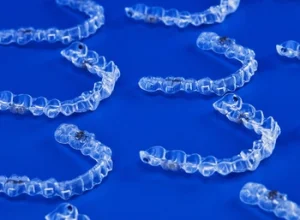 Appearance and Aesthetics
 When weighing braces vs clear aligners, consider these factors:


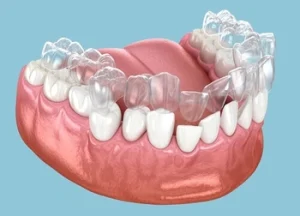 Clear aligners are a less noticeable option than traditional metal braces. These removable aligners
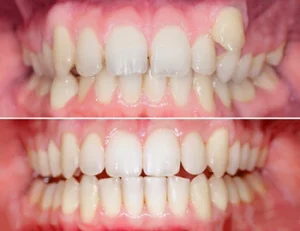 Whether you choose traditional metal braces, clear aligners, or a combination of orthodontic treatment and cosmetic options, a structured plan and ongoing dental guidance ensure effective results.

 Clear aligners work through a sequence of precisely engineered movements. During your initial consultation, your dental practitioner will assess your teeth, gums, and jaw joints to determine whether you are a candidate for treatment.
 Clear aligners are used to treat a range of mild to moderate alignment concerns, such as:
 If you are considering clear aligners, your first step is a consultation with your dental practitioner. They will assess your teeth, gums, and jaw alignment to determine if clear aligners are suitable for you.

 Clear aligners and Invisalign aligners may look similar, but they follow different methods for adjusting teeth.
 Clear aligners offer a simple and affordable way to improve your smile. Unlike Invisalign, they provide more flexibility, allowing you to progress without frequent visits. They are designed to be comfortable and easy to wear, making daily life smoother. Choosing clear aligners means getting high-quality treatment without paying extra for brand-specific options. If you want a treatment that fits your budget and lifestyle while delivering great results, clear aligners are a smart choice. They work effectively for many alignment concerns, helping you achieve a straighter smile with ease.